
The Phi Mu Alpha Composition Contest continues Sinfonia’s 100-year legacy of support for American composers and the creation of new works of American music. Entrants will compete for a grand prize of $5,000, a featured premiere of their work at the 2015 National Convention, and a publishing contract for the winning composition.
Legacy of Composers
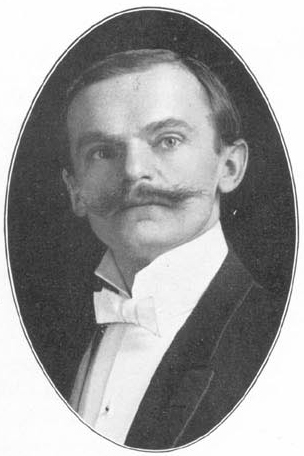 Gustav Mehner
Following the 1960 composition contest, the National Executive Committee announced that the contest would be superseded by the commissioning of more works. The first work commissioned by the Fraternity actually overlapped with the composition contests, premiering at the 1956 Convention. The work, Ode to Consonance, an orchestral piece, was written by composer Roy Harris, founder of the International String Conference and co-founder of the American Composers Alliance, whose style was noted as a fusion between European classicism and American folk. This was followed in 1960 when the Fraternity premiered The Sinfonians by J. Clifton Williams, Beta Omega (Louisiana State) 1946, an immensely popular work to this day. Also in 1960, a work was commissioned from Don Gillis, Gamma Theta (North Texas) 1941. Brother Gillis’s piece is a work titled A Sinfonia for Brass. This began a long line of commissioned works from numerous prominent composers. Other composers whose works were commissioned include Clare Grundman, Beta Xi (Ohio State) 1931, who was recently featured in the fall 2012 issue of the Sinfonian magazine. Brother Grundman wrote Chessboard Suite for concert band for the 1964 Convention. Samuel Adler, Gamma Theta (North Texas) 1960, one of this year’s contest judges, wrote “Begin, My Muse,” a choral work with percussion, in 1969 as part of the Phi Mu Alpha Sinfonia Series. The “Sinfonia Series” continued for several years and included works from William P. Latham, Arthur Frackenpohl, Theta Iota (SUNY-Potsdam) 1968, and Lalo Schifrin. Such commissions continued into the 90’s, when, among others, “The Spirit of Orpheus” by Robert W. Smith, Gamma Alpha (James Madison) ’96, was premiered at the 1997 National Convention.
At the 2012 National Convention, the National Executive Committee announced the revival of both composition contests and major commissioned works. This revival honors a tradition that extends back more than a century, and will continue Sinfonia’s legacy of support for American music into its second century. At the Convention, a rousing fanfare written by composer David Holsinger, Beta Mu (Central Methodist) 1964, was premiered by the Convention’s wind ensemble. And Holsinger has been commissioned to write a major work to be premiered in 2015. The composition contest was also announced, and promises to feature works by a variety of talented composers.
Judges Announced
We are pleased to announce the three distinguished brothers who have graciously agreed to serve as judges for the composition contest, each of whom has made significant contributions to American music in his own right.
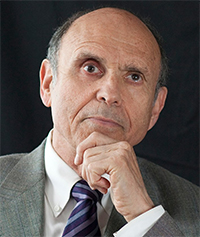 Samuel Adler, Gamma Theta (North Texas) 1960
Brother Adler’s mark on American music stretches into nearly every realm of music. His catalogue includes over 400 published works in all types of instrumentation, including five operas, six symphonies, numerous string quartets, concerti, and several shorter works for orchestra or choir. He has conducted the world over, and founded and conducted the Seventh Army Symphony Orchestra while serving in the United States Army from 1950 to 1952. His contributions also include several acclaimed books and articles on conducting, composition, and orchestration. Following military service, Brother Adler conducted the Dallas Lyric Theater (1954-1958), served as Professor of Composition at the University of North Texas College of Music (1957-1966), Professor of Composition at the Eastman School of Music (1966-1995), and since 1997 has been on the composition faculty at Juilliard.
 Carlisle Floyd, Epsilon Iota (Florida State) 1957
Brother Floyd is one of the most admired and widely performed opera composers and librettists of the last century. He is credited with helping to create an American idiom in opera. Carlisle’s most popular work, Susannah, has become one of the most performed American operas in history. His other popular works include Of Mice and Men, based on the John Steinbeck novel of the same name, and Cold Sassy Tree, his most recent work, written in 2000. Among numerous prominent distinctions, Brother Floyd has been honored with The Citation of Merit by the National Association of American Conductors and Composers, the National Opera Institute’s Award for Service to American Opera, induction into the American Academy of Arts and Letters, the White House National Medal of Arts, and the Fraternity’s own prestigious Man of Music award. He has also been recognized by the National Endowment for the Arts as an honoree for lifetime contribution.
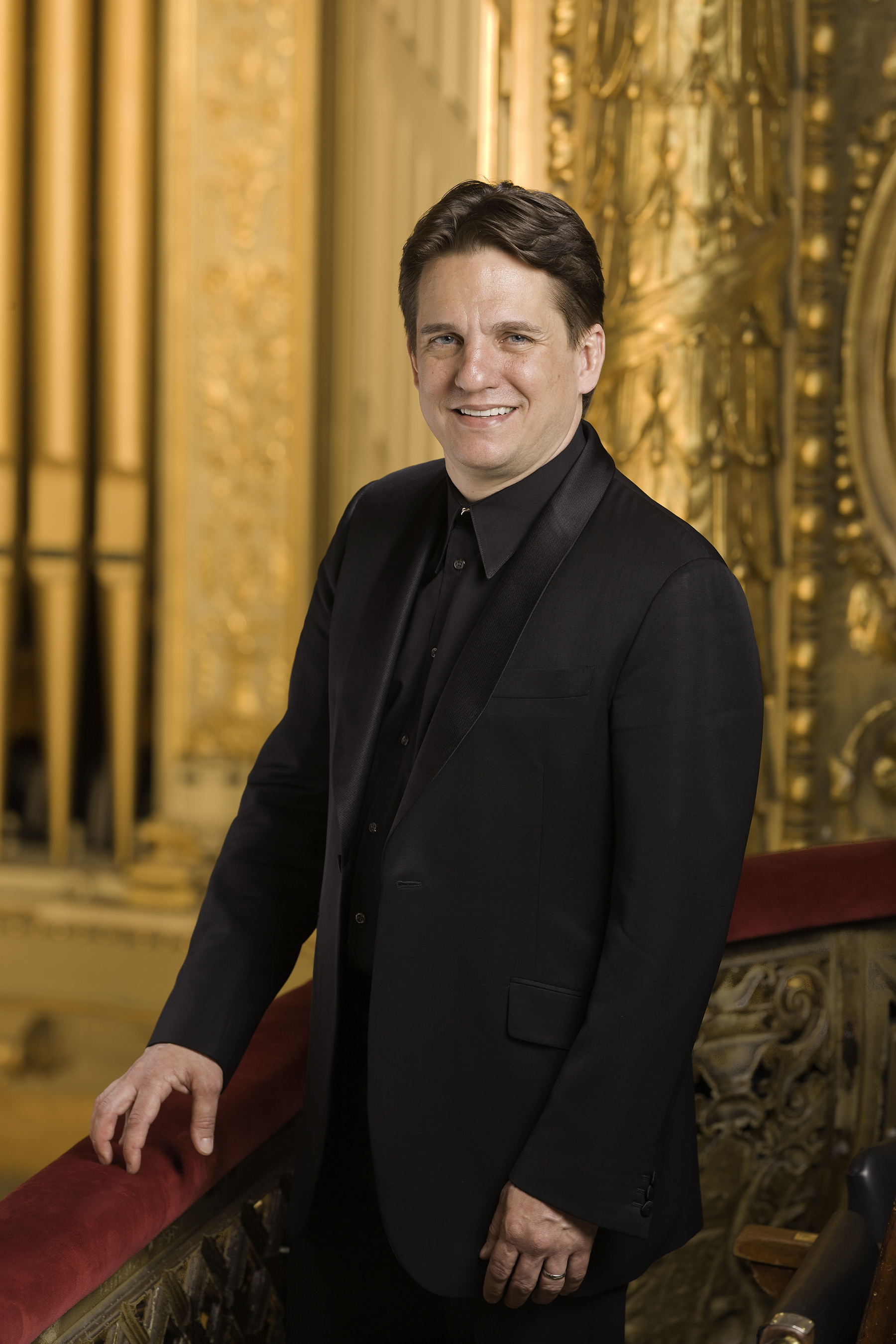 Keith Lockhart, Gamma Eta (Furman) 1978
Brother Lockhart became the 20th conductor of the Boston Pops in 1995. He has worked with a wide array of established artists from virtually every corner of the entertainment world. During his 17-year tenure, he has conducted more than 1,400 Boston Pops concerts. Audiences worldwide love Keith’s inimitable style, expressed not only through his consummate music-making, but also by his unique ability to speak directly to the audience about the music to which he feels so passionately committed. Currently, Brother Lockhart also serves as principal conductor of the BBC Concert Orchestra in London. In addition, he is artistic director of the Brevard Music Center summer institute and festival in North Carolina. He has appeared with virtually every major symphonic ensemble in North America, as well as several in Asia and Europe.
Submitting Your Work
The full history of Sinfonian composers is difficult to describe in a brief article. But the same can be said of Sinfonian composers in the modern era. Have you, or has a brother close to you, composed a piece recently? Premiered a work? Received an honor or accolade for your composing or composition pedagogy? We want to hear about it and share it with the brotherhood! All alumni updates – about composing or otherwise – can be sent to editor@sinfonia.org.
More specifically, we want every interested brother to submit their work for the composition contest. For full contest details and stipulations, head to www.sinfonia.org/compositioncontest.
Deadline for entries is July 1, 2014.
Adding to the Legacy
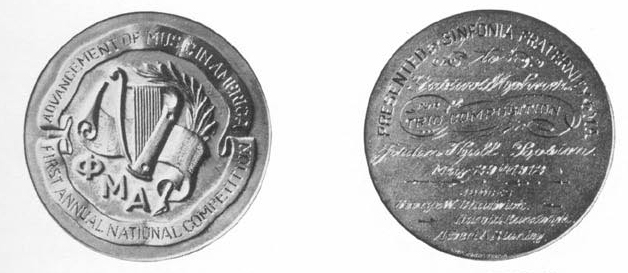 Gold medallion given to the winner of the first sinfonia Composition Competition, 1912
“So as we go about our meetings, our musical activities, and our social gatherings,” wrote President Mongiovi in a recent address, “let us never forget what it really means to be a music Fraternity. I hope that for each of you, your love of music and a profound respect for the power of a Brotherhood as extraordinary as ours will translate into activity in music, support of our Order, and a life that is fuller and richer for being a Sinfonian.” These words capped his address in “the Composers’ Issue” of the Sinfonian magazine, where we went into greater depth on the history of our Fraternity’s support of American music. It’s a legacy that is now continuing.
In 1954, Aaron Copland, Alpha Upsilon (Arizona) 1961, wrote an article on no less a subject than “Music and the Human Spirit.” In it, he concludes, “Only one thing is certain: however arrived at, the process of music and the process of life will always be closely conjoined. So long as the human spirit thrives on this planet, music in some living form will accompany and sustain it and give it expressive meaning.”
This story, and indeed the entire history of Sinfonian composers, is indicative of a connection through decades of experience, pointing to a universality of music that we can all understand intuitively. And the advancement of such music is built into the Object of the Fraternity. Music, and the act of creating it, can enlighten and inspire anyone who hears it. It’s why we highlight such individuals, celebrate them, and support others like them in our ongoing effort to meet the tenets of our Object.